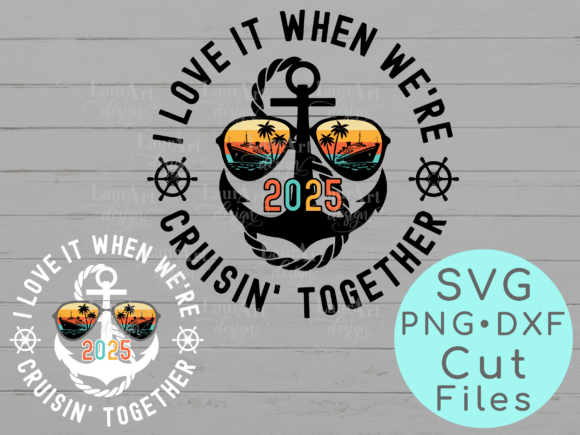
I Love It when We re Cruisin Together Review
As a designer who spends half her life staring at stitch charts and the other half troubleshooting tension issues on vintage machines, I don’t just look for "pretty" designs. I look for viability. I look for how a design behaves under the needle, how it holds up after ten washes, and whether it actually sells. When I Love It when We re Cruisin Together landed in my inbox, my first instinct wasn't to admire the typography immediately—it was to assess its utility for real-world projects.
This is a digital item that promises versatility with five files in one Zip folder, including SVG, DXF, and high-resolution PNG formats at 300 dpi. But for those of us in the embroidery community, file format is only half the battle. The other half is execution. Below is my practical evaluation of this T-Shirt Designs Graphics asset, specifically through the lens of an embroiderer preparing for a busy season of custom orders and small business merchandise.
First Impressions: Mood and Visual Personality
The phrase I Love It when We re Cruisin Together evokes a very specific nostalgia. It’s not just text; it’s a vibe. It suggests summer road trips, convertible tops down, and carefree weekends. From a design perspective, the visual personality leans heavily into casual comfort. It doesn’t scream luxury or formal elegance; instead, it whispers approachable warmth.
For an embroidery project, this mood is crucial. It tells me exactly where this design belongs. It fits naturally on a cotton tee, a canvas tote bag, or perhaps a cozy sweatshirt for a couple’s anniversary gift. The layout feels balanced, likely allowing for a central chest placement or a relaxed back print. As a reviewer, I appreciate when a graphic communicates its intended use without needing explanation. This design says, "Put me on something soft, and let’s go somewhere."
Real-Life Application: Where Does It Shine?
Let’s talk about actual production. I recently had a client request a set of matching gifts for a wedding party—specifically, personalized tote bags for the bridesmaids. Usually, these requests lean toward floral or monogram-heavy designs. However, I considered using I Love It when We re Cruisin Together for a different angle: a "bride squad" road trip theme.
In this scenario, the design performs exceptionally well as a tote bag design. The text is legible, and the theme resonates with the occasion. For custom apparel, such as hoodies or crewnecks, this graphic offers a great opportunity for embroidered patch applications. Imagine a structured cap with the phrase stitched in a bold satin stitch border. It transforms from simple text into a branded accessory.
Furthermore, for Etsy sellers and small shop product creators, this asset is gold. It bridges the gap between personal expression and commercial appeal. A handmade product featuring this phrase can easily become a bestseller during holiday seasons or summer months. It works beautifully for personalized gifts because it implies a relationship—a couple, best friends, or siblings. That emotional connection drives sales more than any fancy font ever could.
Technical Considerations and Stitch Behavior
While the concept is strong, we must address the technical realities of machine embroidery. The product description mentions SVG, DXF, and PNG files. While these are excellent for cutting vinyl or printing, they are not automatically embroidery files unless converted or accompanied by .DST/.PES/etc. files. If you are using this as a digital embroidery file, you need to be careful.
If the design relies heavily on satin stitch for the lettering, ensure the thread count isn’t too dense for the fabric you’re using. On stretchy fabrics like jersey knits for baby embroidery items, a tight satin stitch can pucker the material. In such cases, a combination of fill stitch for background elements and running stitch for outlines might offer a softer, more professional finish.
I also advise checking the stitch density closely. If the design has large areas of solid fill, it may require a sturdy cut-away stabilizer to prevent shifting. For lightweight fabrics like tea towels or thin t-shirts, a tear-away stabilizer might suffice, but always test first. The fabric texture will also interact with the design; a rough linen tote bag might hide minor imperfections, while smooth silk (if you’re feeling adventurous) will reveal every single stitch error.
Where to Be Cautious
Not every surface is created equal. There are specific scenarios where I Love It when We re Cruisin Together might struggle:
- Small Hoop Sizes: If the design exceeds your machine’s smallest hoop, you risk distortion. Keep the final output within your machine’s capabilities.
- Textured Fabrics: Avoid placing this on heavy wools or thick denim if the design relies on fine detail. The texture can obscure the message.
- Curved Surfaces: Applying this to a baseball cap requires precise digitizing to account for the curve. Flat placements on flat surfaces are safer for beginners.
- Dense Stitch Areas: If the design includes intricate decorative accents, ensure your machine can handle the needle penetrations without breaking thread.
Impact on Brand and Customer Trust
In the world of craft business and commercial embroidery, presentation is everything. A well-executed embroidery project signals professionalism. When a customer receives a hoodie with crisp, clean stitching and no loose threads, their trust in your brand increases. They perceive higher value in the finished product.
Using a pre-made graphic like this can save time, but it must be executed with care. If the thread colors clash with the garment, the design loses its appeal. I recommend testing the design in black-and-white mockups to check contrast before committing to expensive specialty threads. Also, consider how the design looks in printable mockups. If it looks good digitally, it sets the right expectation for the buyer.
Practical Designer Notes for Success
Before you rush to your machine, follow these steps to ensure I Love It when We re Cruisin Together delivers the quality you expect:
- Test on Scrap Fabric: Always run a test stitch-out on the same fabric type you plan to use. This reveals tension issues early.
- Check Licensing: Since this is a digital asset, confirm the license terms. Are you allowed to sell finished items? Can you use it for commercial projects? Clarity here protects your business.
- Inspect Small Details: Zoom in on the SVG or DXF. Are there tiny elements that might get lost in stitching? Simplify if necessary.
- Compare Backgrounds: Test the design on both light and dark fabrics. A color that pops on white might disappear on navy blue.
- Use Proper Stabilizer: Match your stabilizer to your fabric weight. Heavy fabric needs heavy support.
Ultimately, I Love It when We re Cruisin Together is a versatile, mood-driven graphic that fits seamlessly into the world of apparel decorators and creative entrepreneurs. It offers a ready-made solution for holiday embroidery, summer collections, and sentimental gifts. By approaching it with technical diligence—checking densities, testing stitches, and respecting licensing—you can turn this digital file into a tangible, profitable, and beautiful piece of art. Whether you are an Etsy seller looking to expand your catalog or a hobbyist making a personalized gift for a loved one, this design provides a solid foundation for success. Just remember: the file gets you started, but your craftsmanship makes it sell.