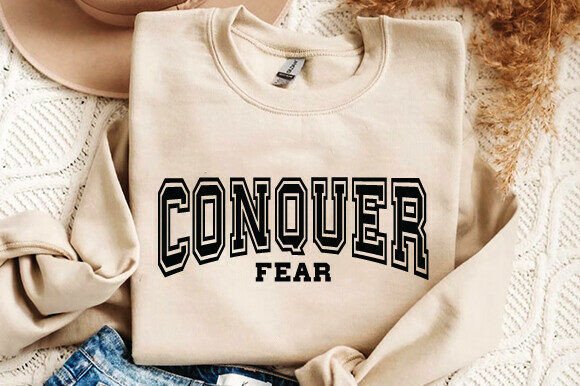
Conquer Fear: A Designer’s Review for Embroidery Projects
When I first pulled the folder for Conquer Fear Conquer Fear Conquer Fear, my initial reaction was less about the text and more about the potential energy behind it. As a designer who spends hours evaluating how digital files translate into physical stitches, I look for designs that have a clear narrative and structural integrity. This particular graphic falls under the category of T-Shirt Designs and is classified as Graphics, which immediately sets certain expectations regarding stitch types and fabric compatibility.
The phrase itself carries weight. It is bold, declarative, and emotionally resonant. For an embroidery product reviewer, the challenge isn't just in reading the words; it's in visualizing how those words will sit on a garment after they have been stitched, washed, and worn. In this review, I’m breaking down how Conquer Fear Conquer Fear Conquer Fear performs in real-world scenarios, from custom apparel to small business merchandise, and where you might want to exercise caution before hitting the start button on your machine.
First Impressions and Visual Mood
The mood created by this design is one of resilience and strength. It doesn’t whisper; it commands attention. When I evaluate a design like this, I’m looking at the layout and detail level. The repetition of the phrase suggests a rhythmic quality, which can be very effective in embroidery if handled correctly. However, because it is sourced as a Graphics file, there is an inherent risk of over-complication if the vector paths are dense.
In its natural habitat, this design feels best suited for projects that benefit from a statement piece. It has the visual personality of a boutique branding element or a high-impact craft fair product. It isn’t subtle, and that’s not a flaw—it’s a feature. It works beautifully for custom apparel where the wearer wants to project confidence. Whether it ends up on a heavy cotton tee or a structured tote bag, the design demands to be seen.
Real-Life Application: From Digital File to Finished Product
Let’s talk about practical use. Imagine you are preparing a batch of personalized gifts for a holiday market or creating inventory for your Etsy shop. How does Conquer Fear Conquer Fear Conquer Fear translate?
- Custom Apparel and Sweatshirts: This is perhaps the most obvious application. On a sweatshirt, the design can serve as a central chest logo or a large back print. The emotional resonance pairs well with the comfort and casual nature of knit fabrics. For sweatshirt embroidery, ensure the stabilizer is robust enough to handle the tension without pucker.
- Tote Bags and Canvas Items: A tote bag design featuring this phrase taps into the empowerment trend. Canvas is forgiving, but it can be thick. You’ll need a needle strong enough to penetrate multiple layers if you’re doing double-stitched handles near the design area. The contrast between the thread and the canvas color will make or break the readability here.
- Baby and Nursery Decor: While the message is intense, it can be softened for baby embroidery if used on a milestone blanket or a nursery wall hanging. Parents often appreciate messages of strength for their children. Just be mindful of scale; a smaller hoop size requires careful simplification of the graphic elements to maintain clarity.
- Commercial Embroidery and Patches: For commercial embroidery, this design has high resale value. An embroidered patch version could be sold separately for customers to iron or sew onto jackets. The durability of the finished product depends heavily on the edge finish and the density of the satin stitches used for borders.
I also considered its utility for holiday embroidery. Gifts that offer encouragement or motivation are perennial sellers. This design fits perfectly into a "New Year, New Mindset" collection or a graduation gift set. The personalized gift angle is strong here because the message is universal yet intimate.
Where to Exercise Caution
No design is perfect for every surface. As an experienced reviewer, I must highlight where Conquer Fear Conquer Fear Conquer Fear might struggle. If you are working with delicate materials, proceed with care.
First, consider small hoop sizes. If the design includes intricate details or tiny lettering, shrinking it down can result in a muddy mess. Satin stitches may merge, and fill stitches might lose their definition. Always inspect small details in your digitizing software before committing to production.
Second, think about textured fabrics and stretchy fabric. While jersey knits are common for t-shirts, they require specific stretch stabilizers to prevent distortion. If the design is placed on a curved surface like a cap or a hat brim, the perspective shift can distort the text. Test these applications thoroughly.
Dark fabrics present another variable. Unless you are using a light-colored thread or a high-density underlay, the design might get lost. Conversely, on thin fabrics, the backing of the embroidery (stabilizer residue) can feel stiff and uncomfortable. For products that need frequent washing, such as kitchen towels or aprons, ensure the design is anchored well to prevent unraveling.
Stitch Density and Fabric Texture
The term stitch density is critical here. High-density designs look professional but can be heavy. Low-density designs might show the fabric weave too much, especially on fabric texture like linen or burlap. When evaluating this machine embroidery design, check the balance. If the design relies on fill stitch for backgrounds, ensure the spacing allows for clean thread movement. If it uses running stitch for outlines, verify that the length is appropriate for the fabric weight.
Visual Appeal and Brand Consistency
A well-executed embroidery project builds customer trust and enhances brand consistency. When a customer sees a crisp, clear rendition of Conquer Fear Conquer Fear Conquer Fear, they perceive value. They see professionalism. In the world of Etsy sellers and small shop products, presentation is everything. A blurred or puckered design undermines the perceived quality of the item, regardless of how good the raw materials are.
This design affects buyer engagement because it speaks directly to the buyer’s identity. People buy things that reflect who they are or who they aspire to be. By ensuring the finished product looks sharp, you are validating that purchase decision. Use printable mockups to preview how the design sits on different garments. Compare light and dark fabric backgrounds to see which offers the best contrast for your target audience.
Practical Designer Notes for Success
Before you rush into production, follow these practical steps to ensure your embroidery project is a success:
- Test on Scrap Fabric: Never skip this step. Run the design on a scrap of the exact fabric you plan to use. This reveals issues with thread colors, tension, and stability.
- Check Stitch Density: Review the digitization file. If the density seems too high for the intended fabric, adjust the settings or simplify the design in your software.
- Confirm Hoop Size: Ensure your hoop is large enough to accommodate the design without cutting off important elements. Also, verify that the design fits within your machine’s maximum stitching area.
- Inspect Small Details: Zoom in on the digital file. Are there any stray pixels or overly thin lines that won’t stitch out? Remove them if necessary.
- Use Proper Stabilizer: The right stabilizer makes the difference between a professional finish and a warped disaster. Cut-away stabilizers are generally safer for stretchy or heavy-use items.
- Review Licensing: Since this is a digital embroidery file, confirm whether you have commercial rights to sell the finished items. This is crucial for craft business owners.
- Black and White Mockup: Convert your design to black and white to check contrast and balance. Sometimes color hides compositional flaws.
Ultimately, Conquer Fear Conquer Fear Conquer Fear is a powerful asset for any designer’s library. It offers emotional depth and visual impact. By approaching it with technical precision and thoughtful placement, you can create design assets that resonate with customers and stand the test of time. Whether you are making a single personalized gift or scaling up for a craft business, this design provides a solid foundation for creating memorable handmade products.