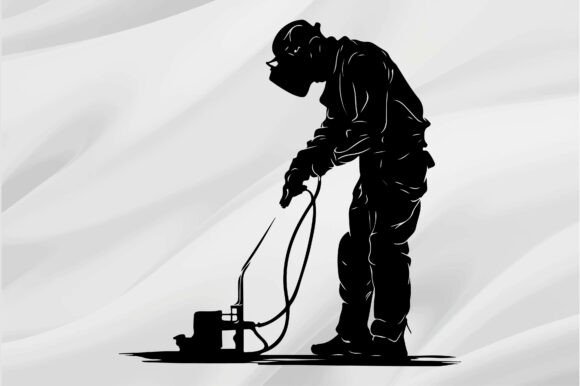
Welder Silhouette Embroidery Review
When I sit down to evaluate a new design file, I am rarely looking for just a pretty picture. As someone who has spent years turning digital vectors into tangible, stitched products, my primary concern is always execution. Will this design hold up on a customer’s sweatshirt? Does it translate well from screen to fabric? Today, I am putting Welder Silhouette through that exact scrutiny. This graphic falls squarely into the Crafts and Graphics categories, marketed as a vector craft graphic for t-shirt designs and printable decoration. But for an embroidery designer, the real question is whether this silhouette possesses the structural integrity and visual weight required for a successful machine embroidery design.
First Impressions and Visual Personality
The moment you load Welder Silhouette onto your digitizing software or preview it in a mockup tool, the mood is immediately established. It is bold, industrial, and unmistakably masculine-leaning, though with enough neutral simplicity that it can transcend traditional gender markers in modern apparel. The silhouette captures the essence of the trade—the stance, the protective gear, the focused posture—without getting bogged down in unnecessary clutter. This is crucial for embroidery. A design that is too intricate often loses its impact when stitched, especially if the stitch density is not perfectly calibrated.
Visually, the shape feels solid. It does not rely on fine lines or delicate details that might get lost in the weave of cotton or polyester blends. Instead, it leans on strong negative space and clear outlines. For a small business owner or an Etsy seller, this is a massive advantage. The design communicates its subject matter instantly, even from a distance at a craft fair. It suggests durability and skill, qualities that resonate deeply with the target audience of welders, tradespeople, and their supporters. The "FIL" tag mentioned in the product description hints at a specific file format or brand association, but regardless of the metadata, the visual personality here is one of reliable craftsmanship.
Real-World Application: From Screen to Stitch
Let’s imagine a practical scenario. You are preparing a batch of custom embroidered tote bags and aprons for a local hardware store giveaway or a boutique shop specializing in trade tools. You need a design that looks professional on heavy canvas but also translates well to softer fabrics like cotton jersey for baby onesies or hoodies. Welder Silhouette steps up nicely in these contexts.
On a tote bag design, the high contrast of the silhouette against a natural canvas background creates a striking focal point. It works beautifully as a chest-sized placement or centered on the front panel. When applied to a sweatshirt embroidery project, the shape provides enough visual mass to justify the cost of production without overwhelming the garment. It feels appropriate for a personalized gift for a father, husband, or partner who works in the trades. The design’s clean lines ensure that it remains legible whether it is printed on a digital listing or stitched onto a finished product.
Furthermore, this graphic is versatile enough for holiday embroidery projects. Think about holiday gifts for the whole family. While the theme is industrial, the silhouette style is timeless. It fits seamlessly into a lineup of trade-themed apparel that sells consistently year-round, particularly around Father’s Day, Christmas, and birthdays. For commercial embroidery work, this kind of recognizable, thematic imagery helps build brand consistency for shops that cater to blue-collar demographics.
Where Caution Is Required
However, no design is perfect for every surface. There are specific situations where Welder Silhouette requires careful consideration. If you are working with a very small hoop size, such as 4x4 inches or smaller, you must be mindful of the scale. While the silhouette is simple, reducing it too much can cause the edges to become jagged or lose definition depending on the thread type used.
Textured fabrics pose another challenge. On a heavily textured fleece or a rough burlap, the clean lines of the vector may get obscured. In these cases, a stabilizer choice becomes critical to keep the fabric taut and the stitches crisp. Similarly, stretchy fabrics like spandex blends require a cut-away stabilizer to prevent the design from distorting during wear. If you attempt to stitch this on dark fabric using light thread, ensure your underlay stitches are sufficient to prevent show-through, which can ruin the clean aesthetic of the silhouette.
Avoid placing this design on curved surfaces like caps unless you have a specialized cap frame and have tested the curvature alignment first. The straight lines of the welder’s stance might look distorted if not properly aligned with the curve of the hat. Additionally, while the design is simple, dense fill areas can sometimes create bulk. If you are embroidering on thin fabric, this bulk might be visible on the reverse side or cause puckering.
Designer Notes for Optimal Results
To get the most out of this embroidery file, I recommend starting with a test run on scrap fabric that matches your final product in weight and texture. Check the stitch density closely. If the design relies heavily on fill stitch areas, ensure they are not so dense that the fabric becomes stiff and uncomfortable. A balance between satin stitch borders and lighter fill areas usually yields the best result for this type of silhouette.
Thread color selection is paramount. Since the design is a silhouette, it likely depends on contrast. On a black shirt, a white or metallic gold thread will make the welder pop. On a navy blue garment, a silver or bright red thread might offer a more subtle yet effective contrast. Always inspect small details in black and white mockups before committing to a full colorway. This helps you verify that the shapes remain distinct and do not merge together due to similar thread tones.
For those selling finished goods, remember to check the licensing terms associated with the digital embroidery file. Even if the graphic is sold as a craft asset, commercial use rights can vary. Ensure you are cleared to sell handmade products featuring this design. Also, consider the end-user experience. How will the finished product feel after multiple washes? Proper washing instructions should be provided to customers to maintain the integrity of the embroidery.
Final Verdict
Welder Silhouette is a strong contender for any designer looking to tap into the trades market. It offers a clean, professional look that translates well across various mediums, from custom apparel to embroidered patches. Its strength lies in its simplicity and recognizability, making it an excellent choice for small shop products and printable mockups alike. By paying attention to fabric choices, stabilizers, and thread contrasts, you can turn this vector graphic into a high-value item that resonates with customers. It is a practical, reliable design asset that deserves a spot in your library for both personal projects and commercial ventures.