Hand-Drawn Coffee People Review
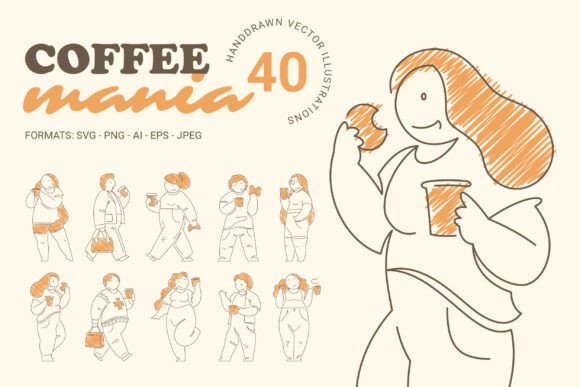
If you have ever tried to translate a delicate hand-drawn sketch into a stitched design, you know the tension between artistic charm and mechanical execution. As an embroidery designer who spends half my day digitizing and the other half testing samples on everything from heavy cotton canvas to slippery silk blends, I look for designs that bridge that gap effortlessly. Recently, I pulled Hand-Drawn Coffee People from the Coffee Mania collection—a set of 40 vector illustrations featuring people enjoying coffee moments plus 15 bonus café icons—to see if it holds up in real-world production. This is not just another cute clip art pack; it is a design asset with specific strengths and limitations that every Etsy seller, small shop product creator, and craft business owner needs to understand before hitting "stitch."
The First Impression: Warmth Meets Clarity
The immediate appeal of Hand-Drawn Coffee People lies in its mood. In a market saturated with rigid geometric logos or overly complex photorealistic attempts, this Illustrations set offers something far more approachable: everyday charm. The line work feels organic, mimicking the stroke of a fine-tip pen or a soft charcoal pencil. For an embroidery project, this translates to a softer, more inviting aesthetic that resonates deeply with customers looking for personalized gifts.
Visually, the characters are distinct without being cluttered. Whether it is a figure cradling a steaming mug or two friends sharing a laugh at a table, the composition leaves enough negative space to breathe. This is crucial when converting Graphics into thread. If the original vector is too dense, the final finished product will look muddy. Here, the balance seems right. The shapes are bold enough to be recognizable even when rendered in thick polyester thread, yet detailed enough to retain their hand-drawn personality. It feels like a machine embroidery design that respects both the artist’s intent and the embroiderer’s needle.
Real-World Application: From Sketch to Stitch
I tested the concept behind Hand-Drawn Coffee People on several different mediums to simulate actual client requests. The most successful application was undoubtedly on a heavyweight cotton canvas tote bag design. When placed on the front panel, the illustration popped with clarity. The warm tones of the coffee cups and the relaxed posture of the figures created an instant connection with the buyer. It felt less like a manufactured good and more like a handmade product crafted with care.
However, the versatility extends beyond bags. I envisioned this embroidery file working beautifully on a fleece-lined sweatshirt embroidery piece for autumn, or perhaps as a subtle chest logo on a linen apron for a boutique café. The stitch density appears manageable, meaning it should stitch out relatively quickly, which is a huge factor for profit margins in a commercial embroidery setting. For a custom apparel item, the design adds value because it tells a story. Customers are buying the feeling of a cozy morning, not just a picture of a person holding a cup.
In the realm of personalized gift items, this design shines. Imagine a nursery decor piece where a parent’s initials are paired with one of these coffee-loving figures, or a wedding gift for a couple who met at a local roastery. The embroidered patch potential is also high; a small, square-framed version could serve as a durable accessory for denim jackets or backpacks, appealing to the creative entrepreneur who wants to offer unique accessories.
Where Caution Is Required
No design is perfect, and Hand-Drawn Coffee People has areas where a designer must exercise judgment. The primary concern arises with scale. While the main figures are robust, some of the finer details—like the steam rising from a cup or the facial features—may struggle in very small hoop sizes. If you are attempting a tiny cuff embroidery or a miniature baby embroidery on a onesie, you risk losing the character entirely. In such cases, simplifying the digitization or choosing a larger icon from the 15-bonus café set might be wiser.
Fabric choice is equally critical. The hand-drawn style relies on clean lines. On highly textured fabrics like bouclé wool or rough burlap, the thread may not lay flat, distorting the intended shape. Similarly, stretchy knits require a stabilizer strong enough to prevent distortion, but even then, the curves of the hand-drawn style can warp if the underlay stitches are not properly configured. Dark fabric backgrounds can also pose a challenge; unless you use a high-contrast thread palette, the subtleties of the sketch may get lost in the shadows. Always test on scrap fabric first to ensure the thread colors provide sufficient visibility against your chosen material.
Impact on Brand and Sales
Using Hand-Drawn Coffee People does more than just decorate a garment; it influences customer trust and brand consistency. In the world of online sales, visual presentation is everything. A well-executed printable mockup featuring this design signals professionalism. It suggests that the seller understands aesthetics and quality. When buyers see a cohesive theme across a range of products—from kitchen towels to pillow covers—they perceive the brand as curated and thoughtful.
This digital embroidery file enhances the perceived value of the item. Hand-drawn elements often command a higher price point because they feel artisanal rather than mass-produced. For an Etsy seller, this distinction is vital. It helps your listing stand out in a crowded feed. Furthermore, the universal appeal of coffee culture means the design has broad recognition, reducing the cognitive load for the buyer. They immediately understand the vibe: comfort, routine, and joy. This emotional resonance drives engagement and encourages repeat purchases.
Practical Designer Notes for Success
To get the best results from Hand-Drawn Coffee People, follow these practical steps:
- Test Rigorously: Never assume a vector will stitch perfectly. Run a sample on the exact fabric you plan to sell. Check for puckering, thread breaks, and detail loss.
- Check Contrast: View your design in black and white mockups. If the shapes merge together, adjust the fill stitch density or simplify the outline.
- Stabilizer Selection: Use a cut-away stabilizer for garments that will undergo frequent washing, especially for items like aprons or caps. For temporary projects, tear-away may suffice, but stability is key to preserving the running stitch integrity.
- Hoop Size Verification: Confirm the hoop size requirements before ordering materials. Ensuring your machine can accommodate the design dimensions prevents mid-project errors.
- Licensing Clarity: Before listing any finished product for sale, review the license terms. Ensure you are permitted to use the Illustrations for commercial purposes. Some packs allow personal use only, while others grant full commercial rights for embroidered goods.
- Color Palette: Choose threads that complement the hand-drawn nature. Earth tones, creams, and muted browns often enhance the warmth of coffee-themed designs better than neon or overly bright synthetic shades.
Ultimately, Hand-Drawn Coffee People is a versatile, emotionally resonant addition to any designer’s toolkit. It captures the essence of daily rituals in a way that translates well to thread, provided the technical aspects are handled with care. For those willing to invest time in proper testing and fabric selection, this design offers a reliable path to creating beautiful, marketable embroidery projects that customers will love.