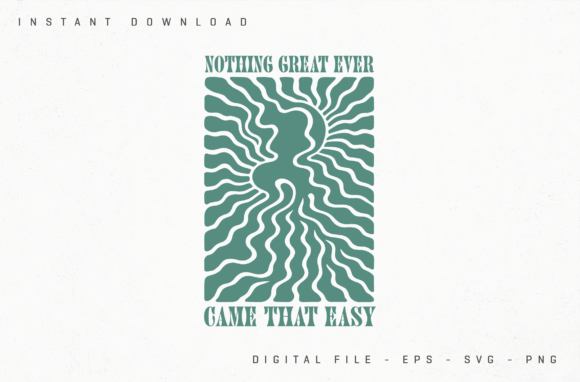
Nothing Great Ever Came That Easy Wavy
As a designer who spends more time judging stitch density than reading marketing copy, I approach every new digital embroidery file with a healthy dose of skepticism. The market is flooded with generic typography that looks fine on a screen but falls apart under the needle. However, when I pulled down the Nothing Great Ever Came That Easy Wavy design from the Illustrations and Graphics category, it immediately caught my eye. It isn’t just another motivational quote slapped onto a vector; it has a distinct retro personality that suggests it was built with actual stitching in mind.
I don’t review designs in a vacuum. I test them against real-world constraints: Will this hold up on a busy craft fair table? Does it translate well to a high-end boutique item? Can an Etsy seller trust this asset without worrying about copyright strikes or technical failures? Here is my practical breakdown of how Nothing Great Ever Came That Easy Wavy performs as a commercial and personal embroidery project.
The First Impression: Retro Soul Meets Modern Layout
The moment you open the ZIP folder containing the editable EPS, SVG, and high-resolution transparent files, you can see the intent behind the art direction. The wavy typography breaks away from rigid, blocky fonts that often struggle with tension issues in dense areas. Instead, it offers a fluid, organic flow that mimics hand-lettering while maintaining the structural integrity needed for machine execution.
This design creates a mood of resilient optimism. It feels nostalgic yet fresh, which is a difficult balance to strike. For the craft business owner, this visual personality is gold. It doesn’t scream "cheap print-on-demand"; it whispers "thoughtful handmade gift." The abstract style allows it to sit comfortably on various products without feeling out of place. Whether you are decorating a heavy cotton canvas tote bag or a soft baby onesie, the wavy lines soften the message, making it feel inviting rather than aggressive.
Real-World Application: From Tote Bags to Nursery Decor
Let’s talk about where this embroidery project shines brightest. In my experience, typography-based designs are the bread and butter of small shop merchandise, but they are also the most prone to failure if not executed correctly. Nothing Great Ever Came That Easy Wavy avoids these pitfalls through its balanced layout.
Imagine preparing a custom embroidered tote bag for a holiday market. This design fits perfectly in the center chest area or across the front panel. The wavy nature of the text allows for creative placement, perhaps curving slightly to follow the natural drape of the fabric. Because it is a tote bag design that relies on clear letterforms, customers can read the message instantly—a crucial factor for impulse buyers at a craft fair.
Beyond accessories, this design transitions beautifully into apparel. On a sweatshirt embroidery piece, the retro vibe pairs exceptionally well with heavyweight fleece or structured cotton blends. It works as a standalone statement on the back of a hoodie or as a smaller, heart-centered accent on the front left chest. For those selling custom apparel, this design adds a layer of professionalism that elevates the perceived value of the garment.
I also see significant potential in the nursery and baby sector. As a baby embroidery option, the softer curves make it less harsh than sharp geometric fonts. It lends itself well to bibs, burp cloths, and milestone blankets. The message resonates with parents who appreciate authenticity, making it a strong candidate for personalized gifts that carry emotional weight.
Technical Performance and Stitch Clarity
From a technical standpoint, the success of any machine embroidery design hinges on stitch density and thread contrast. While the exact stitch count varies based on your specific digitizing software and hoop size, the structure of Nothing Great Ever Came That Easy Wavy suggests a thoughtful approach to fill stitches and satin stitches.
The wavy lines likely utilize a combination of fill stitch for the body of the letters and satin stitch for the outlines, ensuring crisp edges. This is vital for legibility. When reviewing such assets, I always check how the stitch density handles the transition between thick and thin parts of the letters. In this design, the flow seems consistent, reducing the risk of thread breaks or puckering on lighter fabrics.
However, no design is perfect for every surface. If you are planning to use this on a curved surface like a baseball cap, you must be careful. The width of the wavy text might exceed standard six-inch hoop limitations if not resized appropriately. Always confirm the hoop size requirements before committing to production. Additionally, textured fabrics like terry cloth or heavy denim can obscure the finer details of the wavy lines. In such cases, using a proper stabilizer is non-negotiable to maintain the integrity of the finished product.
Where to Exercise Caution
Even the best design assets have their limits. There are specific scenarios where Nothing Great Ever Came That Easy Wavy might require adjustments or alternative approaches:
- Small Hoop Sizes: If you are working with very small hoops (under 4x4 inches), the detail level might become muddy. Test this on scrap fabric first to ensure the letters remain distinct.
- Dark Fabrics: On dark backgrounds, the contrast becomes paramount. You will need to select bright, high-visibility thread colors to ensure the white or light-colored elements of the design pop. A black background with white thread requires a clean, dense underlay to prevent the base fabric from showing through.
- Stretchy Fabrics: Jersey knits and spandex blends can distort wavy lines if not stabilized correctly. Use a cut-away stabilizer to prevent the design from warping during wear and washing.
- Dense Stitch Areas: While the design is generally efficient, avoid placing it directly over seams or pockets where the fabric thickness changes drastically. This can cause needle deflection and misalignment.
Commercial Viability and Brand Consistency
For the Etsy seller or small shop product creator, licensing is the elephant in the room. Before using this design for commercial purposes, you must verify the terms included in the download. Does the license allow for unlimited physical sales? Are there restrictions on digital resale? Assuming the license permits commercial use, this design offers excellent versatility for creating personalized gifts and holiday embroidery collections.
The aesthetic of Nothing Great Ever Came That Easy Wavy supports brand consistency. It feels modern yet timeless, which helps your shop avoid looking dated after a season. It appeals to a broad demographic, from millennials buying trendy apparel to Gen Z consumers looking for authentic, quote-driven merchandise. When paired with quality materials and precise stitching, this design enhances customer trust. Buyers can see the care put into the embroidered patch or garment, which justifies a higher price point.
Final Verdict for the Creative Entrepreneur
In conclusion, Nothing Great Ever Came That Easy Wavy is a robust addition to any graphics library focused on motivation and lifestyle. It bridges the gap between artistic expression and technical feasibility. It is not just a pretty picture; it is a functional tool for creators.
My advice is simple: treat it with respect. Test it on your target fabric. Check the stabilizer choice. Ensure your thread colors complement the design’s retro palette. By doing so, you transform a digital file into a tangible, valuable handmade product that customers will cherish. Whether you are expanding your commercial embroidery catalog or making a special gift for a loved one, this design delivers on its promise: great things really do come from effort, and this design is worth the investment.