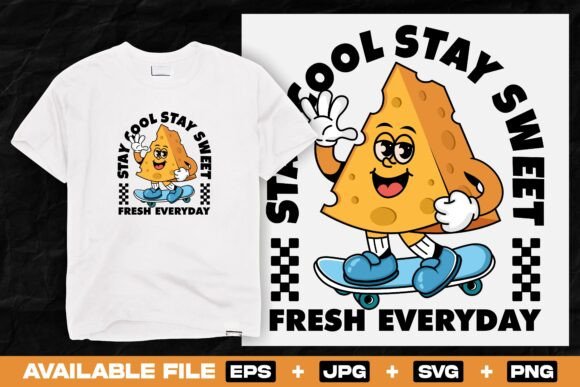
Cheese Mascot Riding a Skateboard Design
When I sit down to evaluate a new digital asset for my embroidery studio, I am rarely looking for just "cute." I am looking for viability. Does this design hold up when translated from pixels to thread? Can it withstand the rigors of production? And most importantly, will the end customer feel that the price point matches the perceived value of the handmade item? This is where Cheese Mascot Riding a Skateboard Design enters the conversation. As an experienced designer who has reviewed hundreds of assets for both personal hobbyist projects and commercial small business lines, I approach this piece with a critical eye toward its practical application in real-world embroidery scenarios.
First Impressions: Mood and Visual Personality
The immediate visual impact of this graphic is rooted in nostalgia. The retro cheese cartoon character riding a skateboard taps into a specific aesthetic that blends food theme illustration with streetwear culture. For a designer, this is a powerful combination. It feels playful but grounded, energetic but controlled. The layout is clean, which is the first green flag I look for when assessing a potential machine embroidery design.
In terms of visual personality, the mascot exudes confidence. It isn’t overly complex or cluttered, which suggests that the underlying vector structure (noted as 100% vector) is likely well-organized. This matters because clean lines translate to cleaner stitches. When you see a character balancing on a board, there is inherent motion in the design. In embroidery, capturing that sense of movement without losing definition requires a good balance of negative space and stitch direction. My initial assessment is that this design has strong potential for custom apparel and streetwear applications because it carries a distinct brand identity that stands out against plain backgrounds.
Real-World Application: From Screen to Stitch
Let’s move beyond the screen and imagine this design in a tangible product. I recently considered using a similar style mascot for a batch of custom embroidered tote bags intended for a local food festival. The concept was to pair a fun, food-related graphic with durable canvas. Cheese Mascot Riding a Skateboard Design fits this narrative perfectly. The bold outlines and recognizable subject matter ensure that even from a distance, the design reads clearly. This clarity is crucial for Etsy seller listings or craft fair displays where customers only have seconds to decide if they are interested.
Furthermore, this design excels in the realm of personalized gifts. Imagine a baby shower gift featuring this character on a soft muslin blanket or a onesie. The theme is lighthearted and gender-neutral enough to appeal to a broad audience, yet specific enough to be memorable. For small shop owners, versatility is currency. This asset can easily transition from a sweatshirt embroidery project for a teen market to a cute apron embroidery for a home cook. The ability to modify, resize, and change colors—highlighted in the product description—means you aren't locked into a single colorway. You can swap the classic yellow for a pastel palette for spring collections or keep it vibrant for summer drops.
Performance on Various Garments and Accessories
- Tote Bags: The sturdy nature of canvas handles the weight of fill stitches well. The design looks professional and polished here, elevating a basic accessory into a boutique-quality item.
- Hats and Caps: Placing this on a curved surface like a baseball cap requires careful digitizing. However, the central composition of the mascot works well for front-center placement, creating a focal point that draws the eye.
- Kitchen Towels and Aprons: For kitchen towel designs, the food theme is inherently appropriate. The contrast between the cheese character and typical linen or cotton textures adds depth to the final finished product.
- Pillow Covers: In a nursery or kid’s room setting, this design adds a pop of color. It serves as excellent nursery decor when stitched onto soft fabrics.
Technical Considerations and Stitch Density
As we dig into the technical side, we must consider how the design translates to stitch density. A character riding a skateboard implies some dynamic shapes. If the digitizer has used too much fill stitch in certain areas, the fabric might pucker. Conversely, if the details are too sparse, the design may look thin and cheap. Because the source is a high-quality vector, resizing should not introduce jagged edges, but you must always check the resulting stitch paths.
I strongly advise testing this embroidery file on scrap fabric before committing to your final material. Pay close attention to the thread colors. The natural yellow of the cheese needs a contrasting background to pop. On dark fabrics, you might need a white underlay or a lighter base thread to prevent the design from getting lost. Also, inspect the small details, such as the wheels of the skateboard or the facial features. These tiny elements often suffer in small hoop sizes. If you are planning to use this as an embroidered patch or a small logo on a shirt pocket, ensure the resolution remains crisp.
Where to Use Caution
While this design is versatile, it is not without its challenges. Avoid placing dense stitch areas on stretchy fabric without proper stabilization, as the tension can distort the skateboard shape. Similarly, be wary of using this on textured fabrics like heavy waffle knits, as the texture might interfere with the smooth satin stitches needed for clean outlines. If you are working with thin fabric, a heavy stabilizer is non-negotiable to maintain structural integrity.
Impact on Brand Value and Customer Trust
In the world of handmade goods, presentation is everything. A well-executed embroidery design signals professionalism. When a customer sees a clean, balanced graphic like Cheese Mascot Riding a Skateboard Design stitched precisely on a garment, it builds trust. It suggests that the maker cares about quality. This directly impacts buyer engagement and repeat business.
Moreover, the novelty factor of a cheese mascot on a skateboard creates a conversation starter. People buy unique items. By offering a design that is both funny and stylish, you differentiate your craft business from generic competitors. Whether you are selling physical goods or digital product sellers offering mockups, this asset provides a strong foundation for creative storytelling. It allows you to build a cohesive line of products that feel connected yet distinct.
Final Designer Notes
Before incorporating Cheese Mascot Riding a Skateboard Design into your workflow, remember these key steps:
- Test First: Always run a test stitch-out on the actual fabric type you plan to use.
- Check Licensing: Confirm whether the license permits commercial use for the finished items you intend to sell.
- Optimize Colors: Experiment with different thread palettes to match your brand’s seasonal trends.
- Review Details: Zoom in on the digitized file to ensure no unnecessary jumps or trims will mar the final look.
Ultimately, this design offers a blend of retro charm and modern utility. It is a smart addition to any designer’s library, provided it is executed with care. For those looking to add a touch of whimsy and street-style flair to their handmade product lineup, this mascot delivers on both style and substance.