Bunny Ear Silhouette Vector Design Review
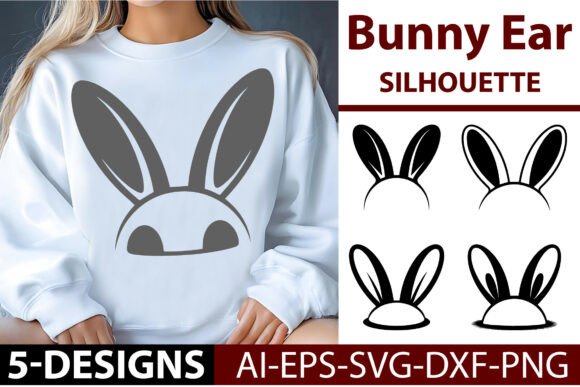
As a designer who spends more time than I care to admit staring at stitch lines and worrying about tension settings, I approach every new asset with a mix of excitement and skepticism. When I first pulled up the Bunny Ear Silhouette Vector Design, my initial reaction was one of quiet appreciation for its simplicity. In a market saturated with overly complex, multi-colored floral arrangements and text-heavy graphics, sometimes the most powerful design assets are the ones that rely on clean geometry and strong negative space.
This isn’t just another clipart image; it is a vector-based silhouette that promises versatility. For those of us working in T-Shirt Designs and broader Graphics categories, the distinction between a raster image and a true vector file cannot be overstated. The fact that this design is editable means I can manipulate the curves without losing resolution, which is crucial when scaling an embroidery file for different applications, from a tiny chest pocket patch to a large back-print sweatshirt.
The First Impression: Mood and Visual Personality
The mood of the Bunny Ear Silhouette Vector Design is distinctly playful yet understated. It evokes a sense of springtime freshness, childhood innocence, or perhaps a subtle nod to Easter traditions without being cliché. The shape itself—two upright ears forming a V-shape—is universally recognizable. This recognition factor is gold for small business owners and Etsy sellers because it reduces the cognitive load for the buyer. They see the ears, they understand the theme, and they feel an immediate emotional connection.
From a purely aesthetic standpoint, the silhouette feels balanced. There is no clutter. For an embroidery project, this is significant. Complex designs often require intricate color changes and precise placement to avoid tangling. A solid silhouette, however, relies on the quality of the edge definition. If the curve of the ear is smooth and the transition to the base is clean, the resulting embroidered piece will look professional and polished. It suggests a modern, minimalist approach to crafting that appeals to contemporary consumers who prefer "less is more" in their home decor and apparel.
Real-World Application: The Tote Bag Scenario
To truly evaluate this design, I need to imagine it in action. Let’s say I am preparing a custom order for a boutique client who wants a line of reusable grocery tote bags for a local farmers' market. These customers value sustainability, aesthetics, and functionality. A loud, neon graphic might clash with the earthy tones of organic produce packaging. However, a crisp, black or navy blue bunny ear silhouette on a natural canvas bag tells a different story.
Here, the Bunny Ear Silhouette Vector Design serves as a sophisticated accent. It doesn’t scream for attention; it whispers charm. When stitched onto the lower corner of the tote, it adds a touch of personality without overwhelming the utility of the product. I can envision using a dense fill stitch for the silhouette if the fabric allows, creating a rich texture that contrasts beautifully with the woven canvas. Alternatively, if the design is used as an applique base, the clean edges would make trimming around the shape much easier, ensuring a neat finish even for less experienced embroiderers.
This scenario highlights why this design fits so well within the realm of handmade products and personalized gifts. It is adaptable enough to be a standalone motif or part of a larger composition. Imagine adding a small embroidered carrot beneath the ears or incorporating delicate script lettering nearby. The vector nature of the file allows me to resize and reposition these elements with precision, ensuring the final composition remains harmonious.
Performance in Embroidery Situations
When discussing how this design performs in real-life embroidery situations, we must consider the mechanics of stitching. As a machine embroidery design, its success depends heavily on thread colors, stitch density, and the type of stabilizer used. Because the silhouette is likely composed of large, open areas, it lends itself well to fill stitches or satin stitches along the border.
For custom apparel like sweatshirts or hoodies, this design works exceptionally well on cotton blends. The fabric provides enough stability to hold the stitch structure without puckering. On baby clothes, where fabrics can be thinner and more delicate, the design’s simplicity is a safety net. There are no tiny, fragile details that could easily break under the needle. This makes it an excellent choice for baby embroidery projects, such as christening gowns or nursery wall hangings.
In the context of an embroidered patch, the silhouette offers high visibility. Patches are often viewed from a distance, and bold shapes translate better than fine lines. Whether you are creating commercial embroidery items for a craft fair or designing digital embroidery files for sale, the Bunny Ear Silhouette Vector Design provides a versatile foundation. It can be adapted for holiday embroidery themes, serving as a neutral-yet-seasonal element that doesn’t date quickly.
Where Caution Is Required
However, not every application is suitable. I must advise caution when considering small hoop sizes. While the design is simple, if the final output size is too small (under two inches), the individual stitches may merge, causing the silhouette to lose its shape and appear as a blob. Similarly, textured fabrics like terry cloth or heavy waffle weave can obscure the clean lines of a vector silhouette. The uneven surface prevents the needle from penetrating consistently, leading to skipped stitches or distorted edges.
Stretchy fabrics present another challenge. Without proper stabilization, the stretching of the material during stitching can cause the design to distort. Thin fabrics also risk tearing if the stitch density is too high. Furthermore, while the silhouette is effective on light backgrounds, using white thread on white fabric is obviously non-starter unless you are using a specialty thread like metallic or glow-in-the-dark, which adds cost and complexity. Dark fabrics require careful consideration of thread contrast; a dark silhouette on a dark background will simply disappear.
Practical Designer Notes for Execution
If you are planning to use this design for a finished product, whether it is a gift or a shop inventory item, follow these practical steps to ensure success:
- Test on Scrap Fabric: Never run your first production piece on the final garment. Test the Bunny Ear Silhouette Vector Design on a scrap of the same material to check for puckering, thread breaks, and tension issues.
- Check Stitch Density: Ensure the design file has appropriate stitch density for the fabric weight. Too dense, and the fabric will pucker; too sparse, and the fabric texture will show through unpleasantly.
- Confirm Hoop Size: Verify that the design dimensions fit comfortably within your machine’s maximum hoop size, leaving room for any additional text or logos you might want to add later.
- Inspect Small Details: Even in a silhouette, zoom in on the digital file. Are there any jagged edges or unnecessary anchor points? Cleaning up the vector path before converting to an embroidery format can save hours of troubleshooting.
- Use Proper Stabilizer: The right stabilizer is invisible until it fails. Use cut-away stabilizer for stretchy garments and tear-away for stable wovens to support the design during stitching.
- Review Licensing: Before selling any handmade product or digital asset derived from this design, confirm the licensing terms. Commercial use rights vary by creator, and understanding these boundaries protects your business from legal issues.
Conclusion
The Bunny Ear Silhouette Vector Design is a thoughtful addition to any designer’s library. It balances charm with professionalism, offering a design that is easy to execute but visually appealing. Its adaptability across various mediums—from tote bags and aprons to caps and pillow covers—makes it a valuable tool for creative entrepreneurs looking to expand their offerings. By paying attention to fabric selection, stitch quality, and proper testing, you can transform this simple vector shape into a stunning embroidered piece that resonates with customers. It is a reminder that sometimes, the simplest shapes carry the most weight.